Westward Expansion
Things to See & Do in Washington
Klondike Gold Rush - Seattle Unit National Historical Park
In 1897 news of a gold strike in the Canadian Yukon reached Seattle, triggering a stampede North to the Klondike Gold Fields. From 1897 to 1898, tens of thousands of people from across the United States and around the world descended upon Seattle's commercial district. While in Seattle, the hopeful miners purchased millions of dollars of food, clothing, equipment, pack animals, and steamship tickets. The final outcome of this great stampede helped shape the Seattle we know today, bolstering the city's reputation as the Queen City of the Pacific Northwest.
Whitman Mission National Historic Site
This site commemorates the courage of Marcus and Narcissa Whitman, the role the Whitmans played in establishing the Oregon Trail, and the challenges encountered when two different cultures meet. In 1836, before the wagon trains, a small intrepid group of Presbyterian missionaries traveled with the annual fur trapper’s caravan into “Oregon Country.” Missionaries Narcissa Whitman and Eliza Spalding became the first white women to travel across the continent. Differences in culture led to growing tensions between the Cayuse people and the Whitmans. Their mission became an important stop along the Oregon Trail, but passing immigrants added to the tension. A measles outbreak in 1847 killed half the local Cayuse. Some of the Cayuse blamed these deaths on Dr. Whitman. Dr. and Mrs. Whitman were killed; sixty people were taken hostage. The deaths of the Whitmans sent a shock wave across the country and prompted Congress to make Oregon a U.S. territory. Whitman Mission is located in SE Washington, 7 miles west of Walla Walla.
Fort Vancouver National Historic Site
When American immigrants arrived in the Oregon Country during the 1830s and 1840s, Fort Vancouver provided them with essential supplies to begin their new settlements. In 1996, the 366-acre Vancouver National Historic Reserve was established to protect adjacent, historically significant historical areas. It includes Fort Vancouver National Historic Site, as well as Vancouver Barracks, Officers' Row, Pearson Field, The Water Resources Education Center, and portions of the Columbia River waterfront.
Lewis & Clark National Historic Trail
In 1804, Meriwether Lewis & William Clark began a voyage of discovery with 45 men, a keelboat, two pirogues,and a dog. They departed from Camp Wood located in what was to become Illinois. They traveled over a three-year period through lands that later became 11 states. Most of the trail follows the Missouri & Columbia Rivers. Much has changed in 200 years but trail portions remain intact. At 3700 miles, Lewis & Clark NHT is the second longest of the 23 National Scenic & National Historic Trails. It begins at Hartford, IL & passes through portions of MO, KS, IA, NE, SD, ND, MT, ID, OR, & WA. Many people follow the trail by auto; others find adventure in the sections that encourage boating, biking, or hiking. You can still see the White Cliffs in Montana as Lewis & Clark did. You may stand where they stood looking over the rolling plains at Spirit Mound in South Dakota. You might meet the descendants of the people who hosted Lewis & Clark all along the trail. It remains for your discovery.
Nez Perce National Historical Park
The 38 sites of Nez Perce National Historical Park are scattered across the states of Idaho, Oregon, Washington and Montana and have been designated to commemorate the stories and history of the Nimiipuu and their interaction with explorers, fur traders, missionaries, soldiers, settlers, gold miners, and farmers who moved through or into the area.
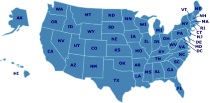
Looking for Another State?
Featured Resources
As an Amazon Associate, we earn from qualifying purchases. We get commissions for purchases made through links on this site.

Home Schooling from Scratch : Simple Living, Super Learning
Parents learn what they really need, how to find or create materials and opportunities for less money, and how to organize their household for economical, happy learning.


A Charlotte Mason Companion: Personal Reflections on the Gentle Art of Learning
Now you can realize the joy filled homeschool of your dreams! This modern classic is written by the homeschool mom who first carried Charlotte Mason's writings to America in her suitcase in 1987. Miss Mason's books were soon republished for a new generation. After ten years of intense study and successful application of Miss Mason s principles with her own children, Karen wrote A Charlotte Mason Companion: Personal Reflections on The Gentle Art of Learning ™. Today's parents can now see what a C...

The Complete Home Learning Source Book : The Essential Resource Guide for Homeschoolers, Parents, and Educators Covering Every Subject from Arithmetic to Zoology
This ambitious reference guide lives up to its name. Practically three inches thick--and we're not talking large print here--it's packed with titles, ordering information, and Web site addresses. From where to send away for a kit to make your own Chilean rain stick to how to order a set of Elizabethan costume paper dolls, the book connects families to a world of learning possibilities. Book titles, short synopses, authors' names, publishers, and years of print make up the bulk of the guide. Clas...
A Reason For® Spelling
A Reason For® Spelling combines the latest research on how children learn to spell with all the strengths of traditional programs. It teaches highfrequency base words, plus hundreds of other word forms. Values-based stories set the theme each week and help make spelling fun. You'll find product information about A Reason For® Spelling here.